

Across industries, data is being generated at unprecedented speed and scale. From logistics to healthcare, finance to energy operations, the ability to sense, process, and act on information in real time has become a defining factor of efficiency and innovation. Real-time decision-making is now what separates agile, intelligent organizations from those that simply react after the fact. At the center of this transformation is Microsoft Fabric, a unified data platform designed to turn live events into instant insight and insight into action.
This is how Real-Time Intelligence in Microsoft Fabric brings together streaming data, analytics, and automation to create smarter, more sustainable operations.
1. What Real-Time Intelligence Really Means
Real-time intelligence is more than dashboards that update every few seconds.
It’s the ability to:
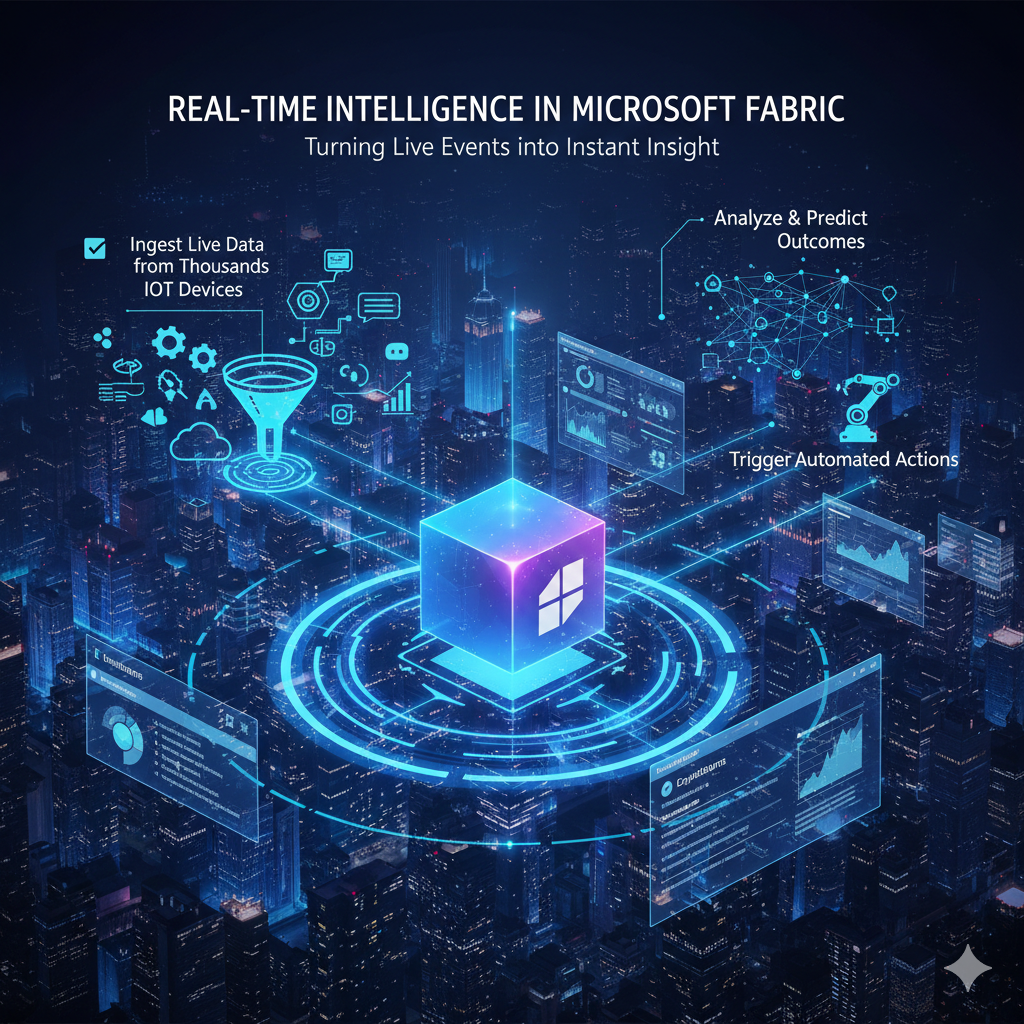
▢ Ingest live data from thousands of IoT devices
▢ Analyze and predict outcomes as data arrives
▢ Trigger automated actions based on those insights
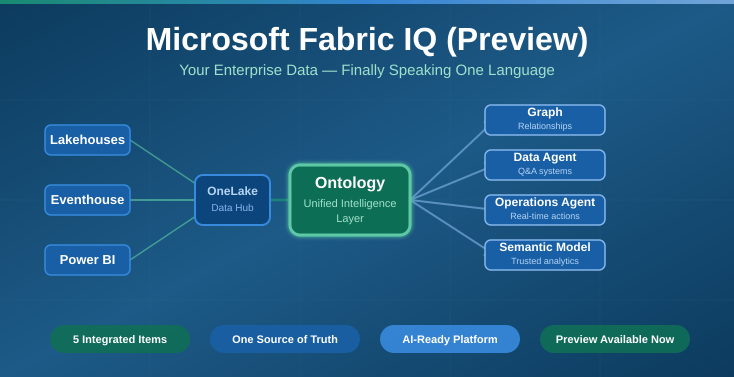
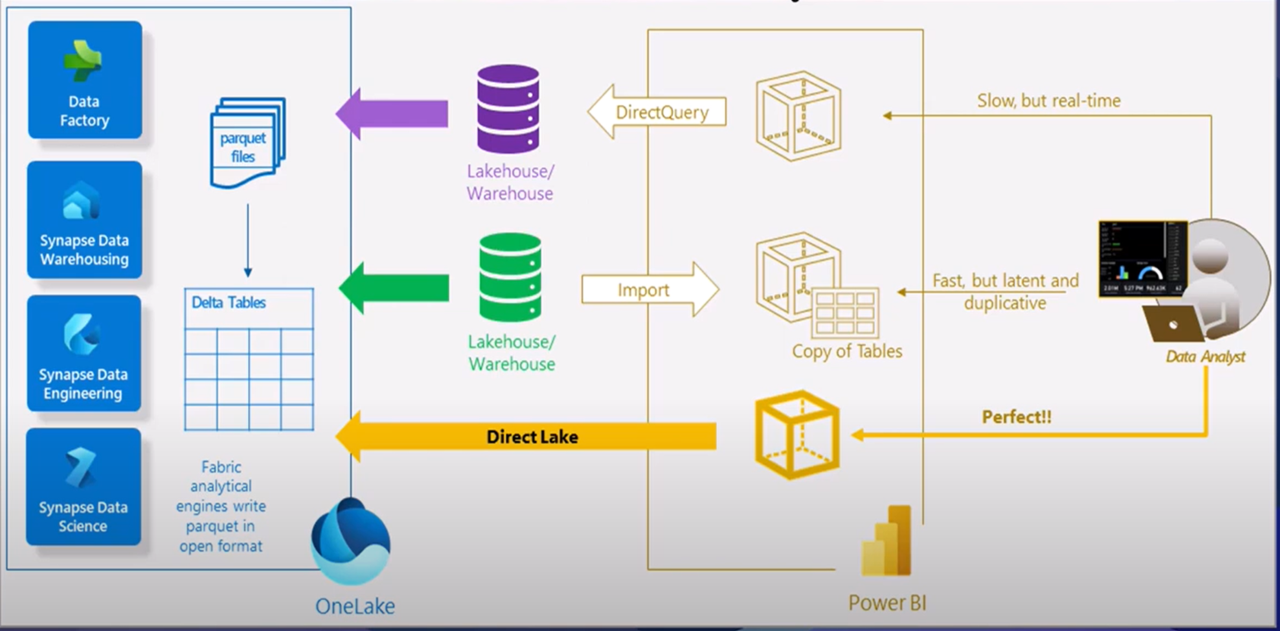
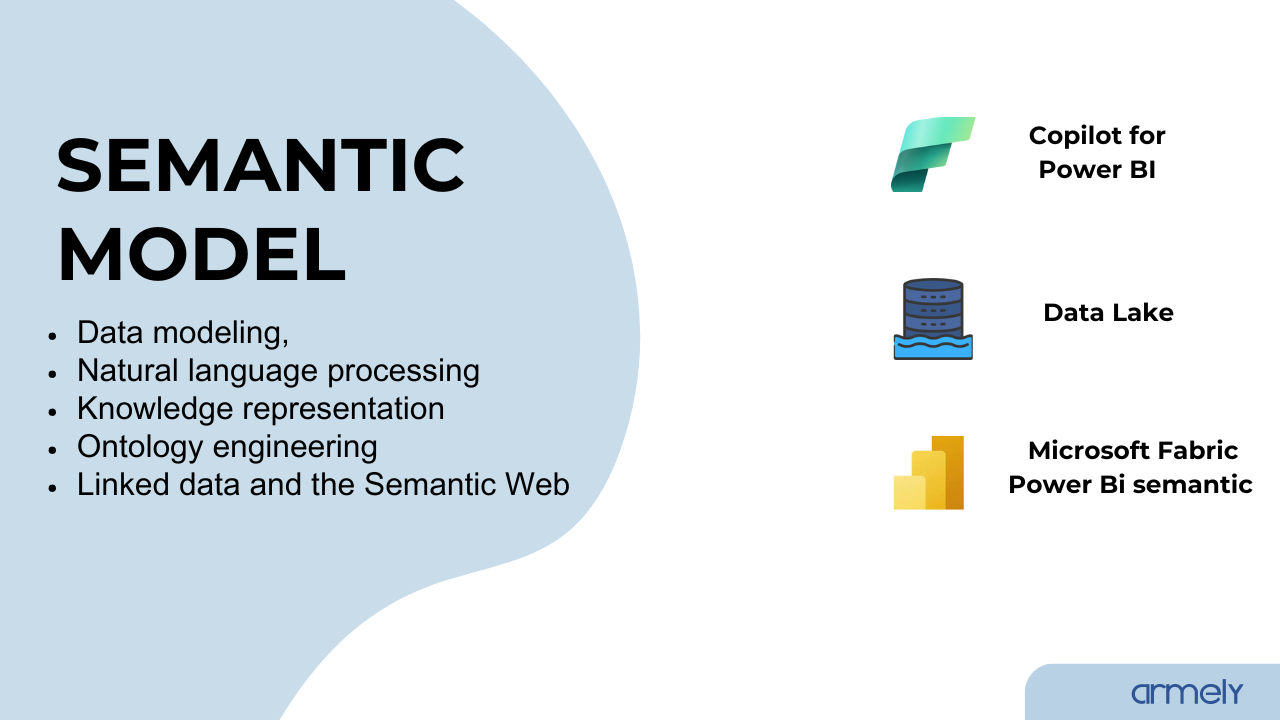
In Microsoft Fabric, this happens natively by connecting Eventstreams, Lakehouse, Dataflows, and Copilot-enabled Data Agents within one ecosystem.
The result: a system that doesn’t just record what happened but responds as it happens.

2. The Power of Real-Time Data in Fabric
At the core of Fabric’s real-time capability is Real-Time Intelligence (RTI) — the foundation for connecting event data, analytics, and action.
Key building blocks include:
▢ Azure Event Hubs + Eventstream: Capture and process high-volume IoT or system telemetry in real time.
▢ Lakehouse: Store both streaming and historical data in an open Delta format for analysis or training models.
▢ Dataflows Gen2 & Notebooks: Transform and prepare data in motion.
▢ SynapseML & AutoML: Apply predictive models for anomaly detection and forecasting.
Together, these components enable continuous insight — letting organizations analyze millions of data points per second without waiting for scheduled refreshes.


3. From Data to Action: The Intelligence Layer
Real-time data only becomes valuable when it drives immediate, automated action.
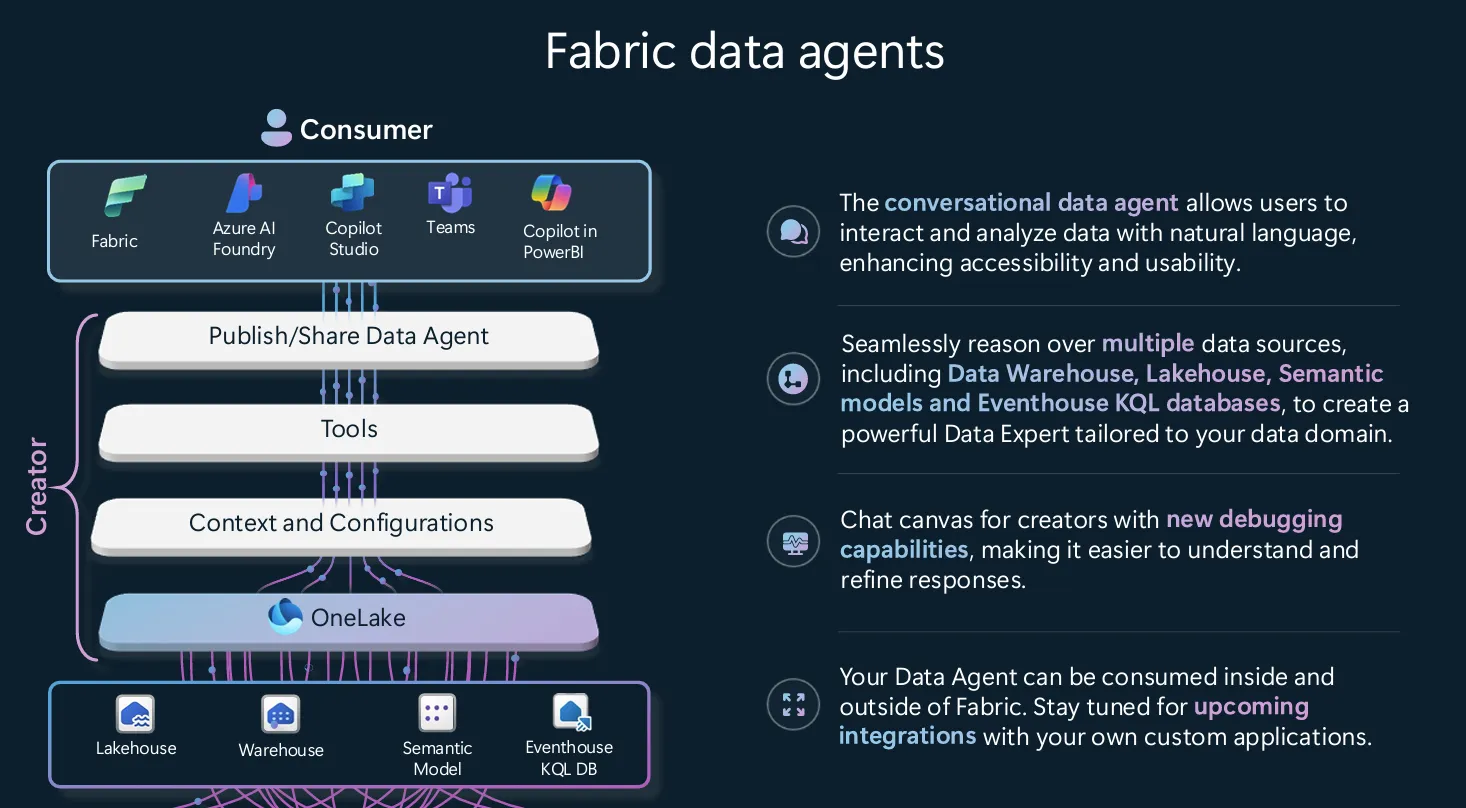
Fabric’s Data Agents and Data Activator make that possible.
▢ Data Agents allow users to ask natural-language questions directly against Fabric data, for example:
“Which zones have sensors reporting anomalies right now?”
“What’s the predicted demand in the next 6 hours?”
The agent instantly queries Fabric’s tables, interprets intent, and returns analytical summaries.
▢ Data Activator continuously monitors incoming data for triggers like spikes or thresholds and automatically calls Power Automate, Power BI alerts, or API endpoints to act.
In short, Fabric links analytics with automation, creating a truly event-driven intelligence loop
4. Where Copilot Studio Fits In
While Fabric manages intelligence, Copilot Studio connects it to people.
It allows teams to interact with data conversationally and automate tasks seamlessly.
Imagine a city operations manager asking Copilot in Teams:
“Show me areas where waste bins are nearly full.”
Within seconds, Copilot queries the Fabric Data Agent, retrieves predictions, and triggers automated Planner task creation for field teams.
This closes the gap between insight and execution no manual dashboards, no delays, just data-driven action in real time.

5. Why Real-Time Intelligence in Fabric Matters
For organizations and governments alike, the advantages are transformative:
▢ Unified streaming and historical analytics in one workspace
▢ AI-ready pipelines for faster, predictive decision-making
▢ Simplified architecture — no external integrations needed
▢ Instant scalability and low operational overhead
Microsoft Fabric makes it possible to move from fragmented systems to a single source of intelligent truth.
6. The Bigger Picture
The potential of Real-Time Intelligence extends across every sector and scenario.
The same architecture that powers live analytics for one use case can transform many others:
▢ Manufacturing — monitor production lines and predict maintenance needs
▢ Finance — detect fraud, analyze risk, and monitor transactions instantly
▢ Energy — optimize grid efficiency and predict demand fluctuations
▢ Healthcare — analyze patient vitals and alert clinicians in real time
Retail — track consumer behavior and adjust inventory dynamically
Every event becomes a data point, and every data point can trigger an intelligent response.
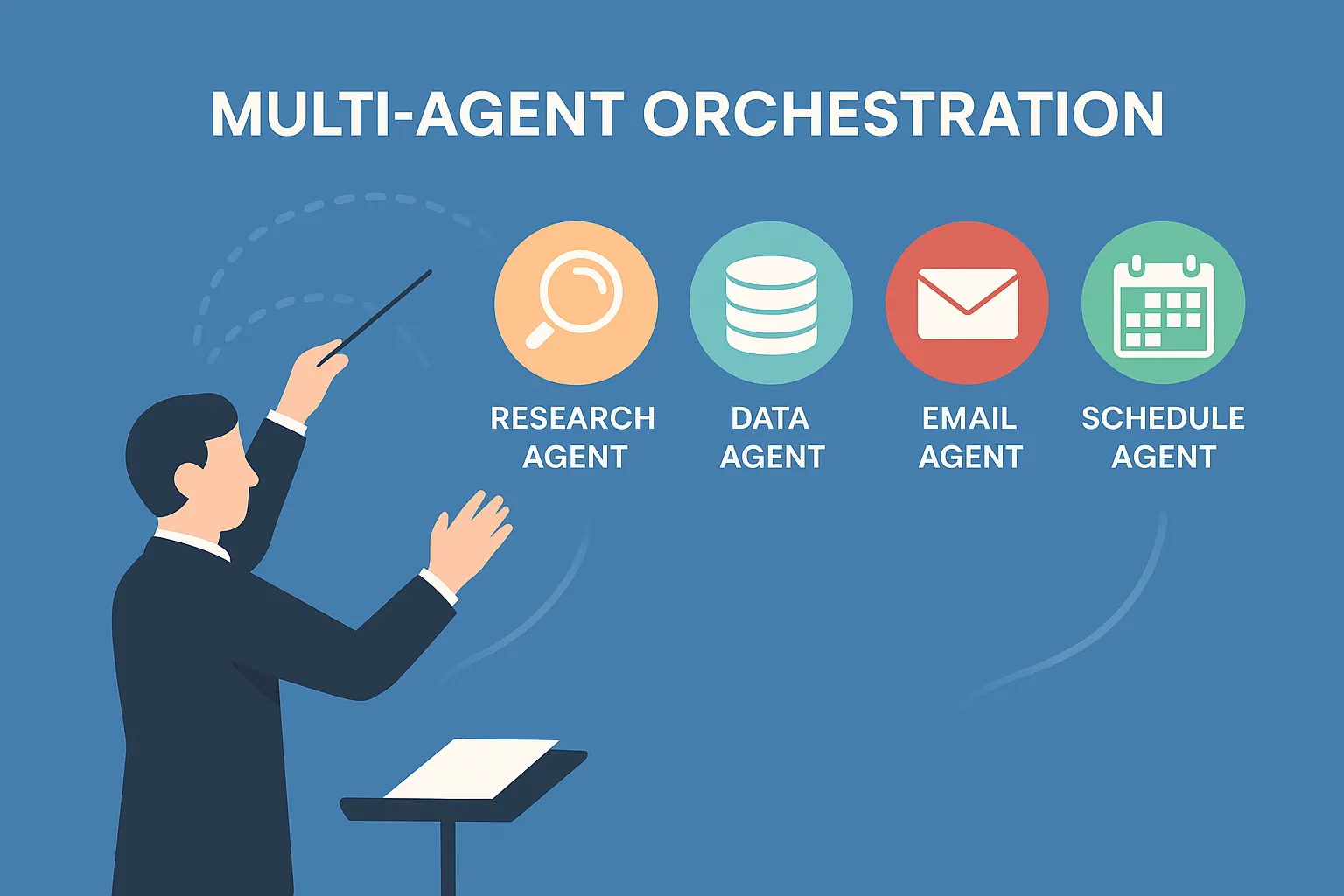
Real-Time Intelligence allows organizations to move from observation to orchestration.
7. How to Get Started with Real-Time Intelligence in Microsoft Fabric
If you’re new to Fabric’s Real-Time capabilities, here’s a roadmap to start experimenting today:
- Set up an Eventstream in Fabric
▢ Connect data sources like Azure Event Hubs, IoT devices, or simulation scripts.
▢ Verify incoming data visually through Fabric’s Eventstream Monitor.
- Create a Lakehouse for Storage
- Enable automatic streaming ingestion so data lands in your Lakehouse in near real time.
- Structure it into “Bronze → Silver → Gold” layers for analytics.
- Build a Real-Time Dashboard
- Connect Power BI directly to the Lakehouse to visualize live metrics.
- Use the Real-Time Intelligence Hub to define events and filters.
- Deploy a Data Agent
- Train the agent on your Lakehouse tables.
- Use Copilot or Teams to query your data in natural language.
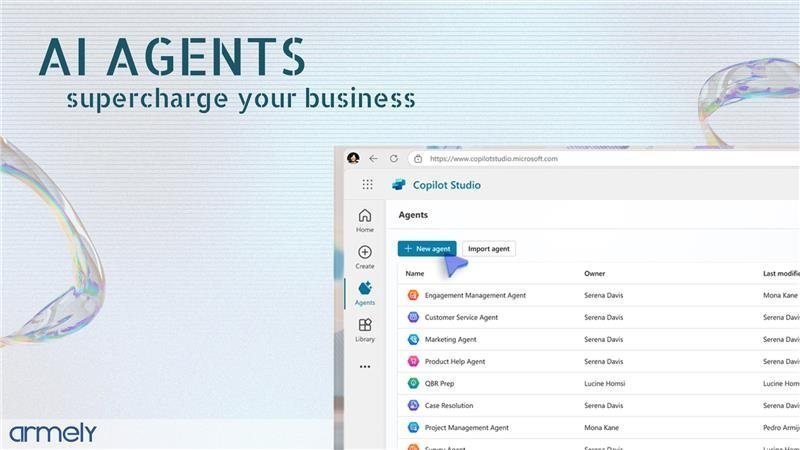
- Automate with Power Automate and Copilot Studio
- Build a flow that reacts to your agent’s alerts — for example, sending a Teams message when thresholds are exceeded.
- Create conversational topics in Copilot Studio that let users act on insights instantly.
- Test, Tune, and Scale
- Experiment with data frequency, triggers, and AI models.
- Gradually integrate more data sources or predictive scenarios.
8. Final Thoughts
Real-Time Intelligence in Microsoft Fabric isn’t just a technical upgrade it’s a strategic shift.
It replaces static dashboards with adaptive data systems that learn, predict, and act automatically.
As enterprises embrace this model, they’ll discover that real-time isn’t just faster, it’s transformative.
It’s where insights become operations, and decisions happen as data happens.
Here at Armely, we design and build real-time intelligence solutions that transform how organizations operate. If your team is ready to move from reactive to intelligent, reach out and we’ll help you implement Microsoft Fabric–powered systems that connect data to decision and insight to action.