
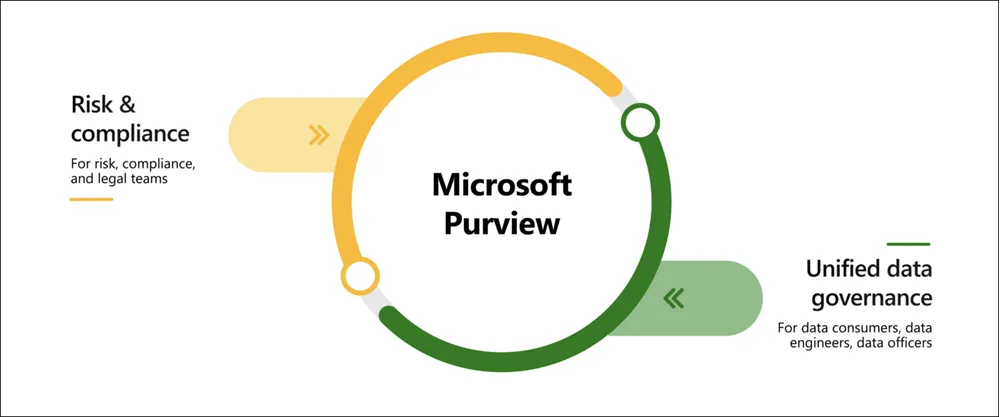

Microsoft Purview is a powerful data governance solution that helps organizations discover, classify, and manage data across their entire data estate. However, accessing Purview metadata directly from Power BI or Excel might seem tricky.
Good news: You can easily leverage the Microsoft Graph API + Power Query (M Language) to read Purview metadata!
✅ What You'll Learn
- ✔️ Register an Azure AD App to access Purview via Graph
- ✔️ Grant the necessary permissions
- ✔️ Generate an access token in Power Query
- ✔️ Query Purview using Microsoft Graph API from Power Query
- ✔️ Load Purview data into Power BI or Excel
🟣 Step 1: Register an App in Azure AD
- ✔️ Go to Azure Portal > Azure Active Directory > App registrations > New registration
- ✔️ Name it:
PurviewGraphReader - ✔️ Set Redirect URI as
https://localhost(for testing) - ✔️ Click Register
🟣 Step 2: Assign API Permissions
- ✔️ Go to API permissions > Add a permission
- ✔️ Choose Microsoft Graph
- ✔️ Select Application permissions
- ✔️ Search for and add:
Catalog.Read.All(needed for Purview Catalog API) - ✔️ Click Grant admin consent
🟣 Step 3: Create a Client Secret
- ✔️ Go to Certificates & Secrets > New client secret
- ✔️ Provide a description and set expiry
- ✔️ Save the generated secret value securely
🟣 Step 4: Collect Important Details
- ✔️ Directory (Tenant) ID
- ✔️ Application (Client) ID
- ✔️ Client Secret
- ✔️ Purview Account Name & Endpoint (e.g.,
https://your-account.purview.azure.com)
🟣 Step 5: Sample Power Query Code
let
    // Parameters - replace with your values
    tenantId = "xxxxxxxx-xxxx-xxxx-xxxx-xxxxxxxxxxxx",
    clientId = "xxxxxxxx-xxxx-xxxx-xxxx-xxxxxxxxxxxx",
    clientSecret = "YOUR_CLIENT_SECRET",
    purviewAccountName = "your-purview-account",

    // Get Token URL
    tokenUrl = "https://login.microsoftonline.com/" & tenantId & "/oauth2/v2.0/token",

    // Request Access Token
    tokenResponse = Json.Document(Web.Contents(tokenUrl,
        [
            Content = Text.ToBinary("client_id=" & clientId &
                                    "&scope=https%3A%2F%2Fpurview.azure.net%2F.default" &
                                    "&client_secret=" & clientSecret &
                                    "&grant_type=client_credentials"),
            Headers = [#"Content-Type"="application/x-www-form-urlencoded"]
        ])),
    access_token = tokenResponse[access_token],

    // Call Purview Catalog API
    purviewUrl = "https://" & purviewAccountName & ".purview.azure.com/catalog/api/search/query?api-version=2021-05-01-preview",

    // Example Body - Adjust for your use case
    body = "{""keywords"":""*""}",

    purviewResponse = Json.Document(Web.Contents(purviewUrl,
        [
            Headers = [
                #"Authorization" = "Bearer " & access_token,
                #"Content-Type"="application/json"
            ],
            Content=Text.ToBinary(body),
            Method="POST"
        ])),

    // Convert API response to a table
    purviewData = purviewResponse[results],
    purviewTable = Table.FromList(purviewData, Splitter.SplitByNothing(), {"Record"})
in
    purviewTable
Explanation:
- ✔️ Authenticates to Azure AD using OAuth2
- ✔️ Queries Purview Catalog API
- ✔️ Retrieves catalog search results
- ✔️ Adaptable for custom queries (e.g., glossary, assets)
🟣 Step 6: Load into Power BI or Excel
You can now easily load this data inside:
- ✔️ Power BI Desktop
- ✔️ Excel Power Query Editor
Point to notes:
- ✔️ Purview API is not yet part of core Microsoft Graph but follows a similar structure
- ✔️
Catalog.Read.Allpermission is read-only - ✔️ Expand records into columns easily inside Power Query Editor
Common Errors:
| Error | Reason |
|---|---|
| Invalid client secret | Check if the client secret expired or is wrong |
| Insufficient privileges | Make sure you granted admin consent |
| 401 Unauthorized | Wrong tenant ID, client ID, or missing scope |
Tips:
- ✔️ Change the
bodyparameter for custom searches - ✔️ Extend this to read glossary, classification, or asset data
- ✔️ Use Power Query parameters to make the code reusable